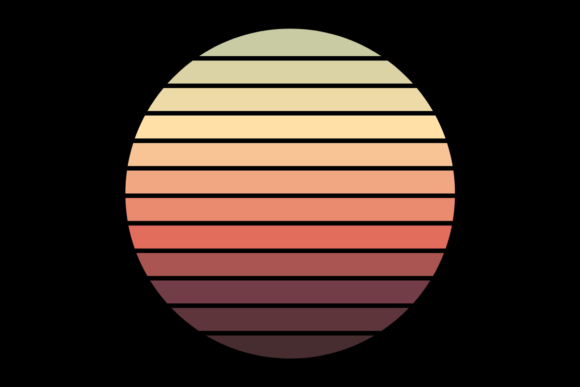
Retro Sunset Circle 80: A Designer's Reality Check
I have spent years reviewing embroidery files, testing them on everything from delicate baby onesies to heavy-duty work aprons. When I first saw Retro Sunset Circle 80, my initial reaction was practical rather than purely aesthetic. We all know the market trend: about 25 of the Top 100 shirts selling on Amazon feature a retro vintage sunset motif. It is a staple design that screams nostalgia and warmth. But as an experienced designer, I do not just look at the digital preview; I visualize the stitch density, the thread tension, and how the final product will sit on a customer's shelf.
This review is not about hype. It is about whether Retro Sunset Circle 80 is a viable asset for your next real-world project. Whether you are an Etsy seller looking to boost your shop traffic or a hobbyist making a personalized gift, understanding the execution details is what separates a professional finish from a amateur mistake.
The Mood and Visual Personality
The first impression of Retro Sunset Circle 80 is one of effortless cool. The circular layout creates a focal point that feels balanced and contained, which is crucial for embroidery where space is often limited by the hoop size. The theme taps into a specific emotional response—warmth, summer evenings, and vintage aesthetics. This is not just a graphic; it is a mood setter.
In terms of visual personality, this design feels versatile enough to bridge the gap between high-end boutique branding and casual craft fair merchandise. The shape suggests a badge or a patch, making it naturally suited for placement on the chest of a sweatshirt or the side pocket of a tote bag. However, the "circle" aspect demands attention to curvature. If you place this on a flat surface like a tea towel, it works perfectly. If you attempt to embroider it on a curved cap without proper digitizing adjustments, the geometry might distort. The design relies on clean lines and bold color blocks to maintain its integrity, which means the choice of thread colors becomes critical for success.
Real-World Application Scenarios
Let me walk you through a specific scenario I recently considered for a client project. Imagine you are preparing a custom embroidered tote bag for a local artisan market. You want something that stands out but remains timeless. Retro Sunset Circle 80 fits this bill beautifully. The circular composition draws the eye immediately, and the retro vibe resonates with the target demographic of handmade goods buyers.
However, consider the process. You would need to select a sturdy fabric, perhaps canvas or a heavy cotton blend, to support the weight of the stitches. The design would likely perform best with a satin stitch border if available, giving it a polished edge that prevents fraying. For the fill areas, a dense fill stitch would capture the gradient effect of the sunset, creating depth that looks expensive in person. This is the kind of design that elevates a simple $10 tote bag into a $35 boutique item.
But let us expand the scope. What about baby clothes? The soft curves of the circle are gentle and appealing for nursery decor or baby bodysuits. In this context, Retro Sunset Circle 80 offers a softer alternative to sharp geometric shapes. Yet, you must be cautious. Embroidering on stretchy baby knits requires a stabilizer that can handle the pull of the design without causing puckering. The design itself does not dictate the stability, but the machine settings and stabilizer choice do.
For commercial projects, such as holiday gifts or wedding favors, this design has strong recognition value. People associate the sunset motif with relaxation and celebration. Placing it on a pillow cover or a kitchen towel adds a touch of homey charm. The key here is consistency. If you are building a brand, using Retro Sunset Circle 80 consistently across different products reinforces your identity. It becomes a signature element that customers recognize instantly.
Where Caution is Required
Despite its appeal, there are specific situations where Retro Sunset Circle 80 might struggle. Small hoop sizes are the primary concern. If the design includes fine details within the sunset rays or intricate text, shrinking it down for a small chest logo might result in muddy stitching. The threads may merge, losing the definition that makes the design attractive in the first place.
Textured fabrics also pose a challenge. While a rough linen might complement the retro aesthetic, it can make it difficult for the needle to penetrate cleanly, leading to skipped stitches. Thin fabrics, especially those prone to stretching, require significant reinforcement. Without a proper stabilizer, the tension of the embroidery could warp the material, ruining the finished product.
Dense stitch areas are another potential pitfall. If the design uses a high density of fill stitches, it might become too stiff for items that need to drape softly, like a lightweight summer dress or a fitted t-shirt. Additionally, dark fabrics present a visibility issue. Unless you use light-colored threads or underlay techniques, the sunset colors might get lost against a black background. Always test the contrast before committing to a full production run.
Impact on Product Value and Trust
The quality of your embroidery directly influences customer trust. A well-executed Retro Sunset Circle 80 design signals professionalism. It shows that you care about the details, from the alignment of the circle to the neatness of the back of the work. Conversely, a poorly stitched version can make even the best design look cheap.
When customers see a crisp, vibrant sunset on a high-quality garment, they perceive higher value. They are willing to pay more for a product that looks professionally made. This design has the potential to increase buyer engagement because it is visually striking and emotionally resonant. It tells a story of craftsmanship and style, which is essential for handmade product sellers and creative entrepreneurs.
Furthermore, the versatility of the design allows for creative marketing. You can create printable mockups showing the design on various items, from aprons to hats, helping potential buyers visualize the final result. This transparency builds confidence and reduces hesitation in the purchasing decision.
Practical Designer Notes for Execution
Before you hit the start button on your machine, there are several steps you must take to ensure success. First, always test the design on scrap fabric. This is non-negotiable. You need to check the thread color contrast and ensure the stitch density is appropriate for the fabric you are using. Review the stitch count and confirm the hoop size matches your intended project dimensions.
Inspect the small details closely. Are the corners of the circle sharp? Is the text legible? Sometimes, digital previews can hide minor flaws that only appear when stitched. Use a black and white mockup to check the contrast levels, ensuring the design pops regardless of the background color. Compare how it looks on both light and dark fabric backgrounds to make an informed decision.
Use the proper stabilizer for your specific fabric type. This is often the difference between a puckered mess and a smooth finish. Confirm whether the design works for both personal and commercial projects by checking the license terms provided with the download. If you plan to sell finished items or digital products, you must have explicit permission to do so.
If the product description mentions receiving 5 digital files in a zip folder, including SVG and AI formats, verify that these are compatible with your digitizing software. Ensure the file extensions are correct and that the vector paths are closed properly. Do not assume compatibility; check it yourself.
Finally, remember that Retro Sunset Circle 80 is a tool. Its success depends on your skill as an embroiderer. Treat it with respect, prepare your workspace, and execute with precision. By doing so, you transform a simple digital file into a tangible piece of art that brings joy to the recipient and pride to the creator.